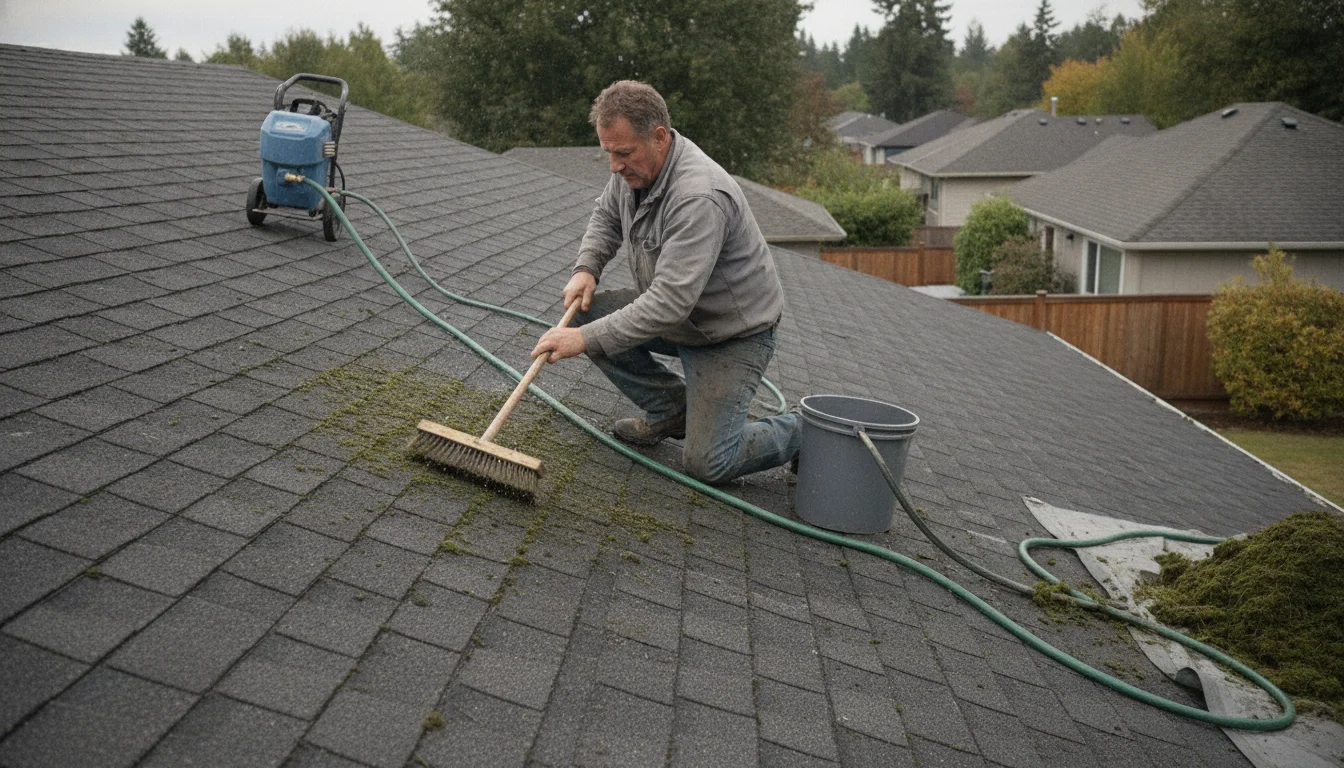
After a wet week in Alpharetta, green clumps and black streaks can appear fast. Here’s the simple rule: clean the roof when shingles are intact and watertight; replace the roof when you have leaks, soft spots, curled or missing shingles, or the system is near the end of its service life. Soft washing is the low-pressure, detergent-based method that removes moss and algae without stripping the protective shingle grit.
Key Takeaways
- Clean if shingles are sound, flat, and leak-free; replace if there are leaks, soft spots, or widespread curling.
- Soft washing removes moss and black streaks without grinding off granules.
- Age, depth of moss, and attic moisture are the big deciding factors.
- Costs and timelines vary; ask about safety, runoff control, and warranty-friendly methods.
1. Roof Moss Removal vs Roof Replacement: Key Differences
Moss traps water. It wedges under tabs, lifts edges, and accelerates wear. Asphalt shingles are topped with protective granules; granule loss means that sandy layer has shed, cutting UV protection and shortening service life. Over time, trapped moisture can also contribute to deck rot.
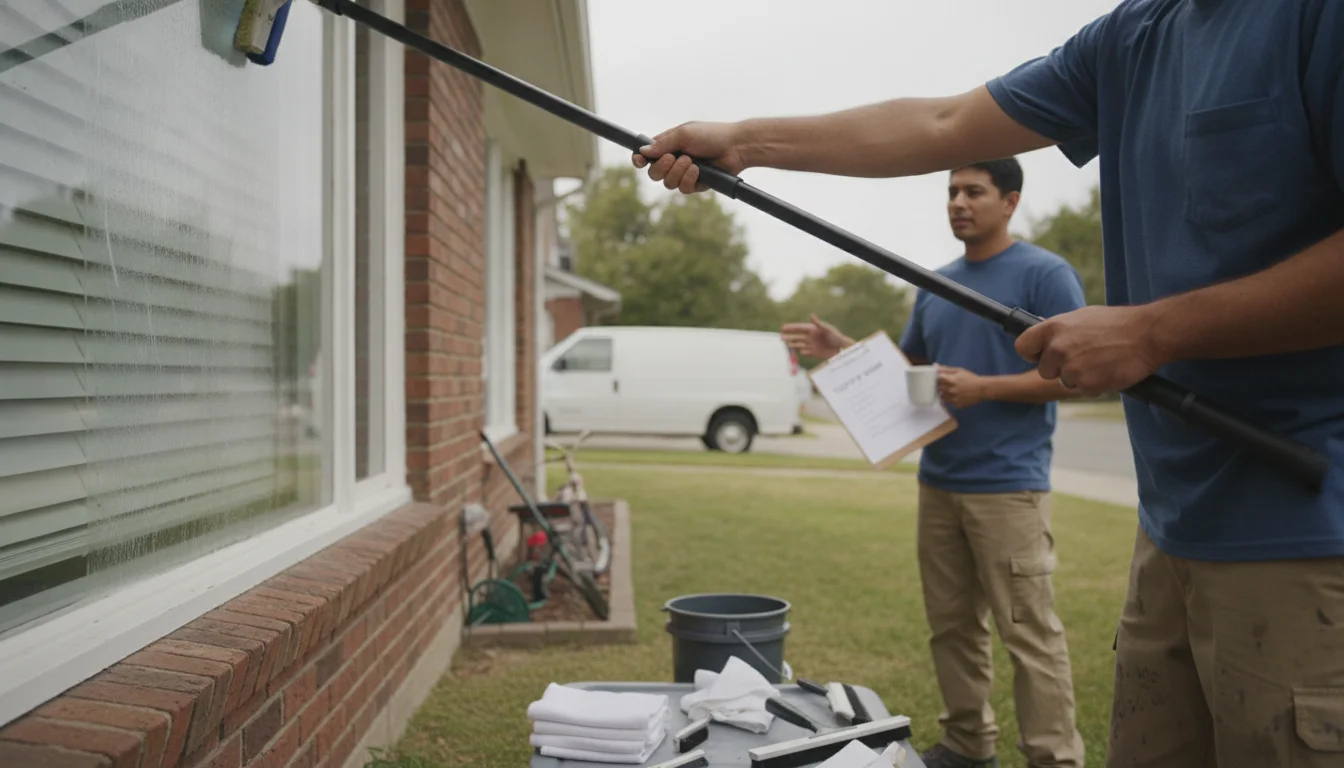
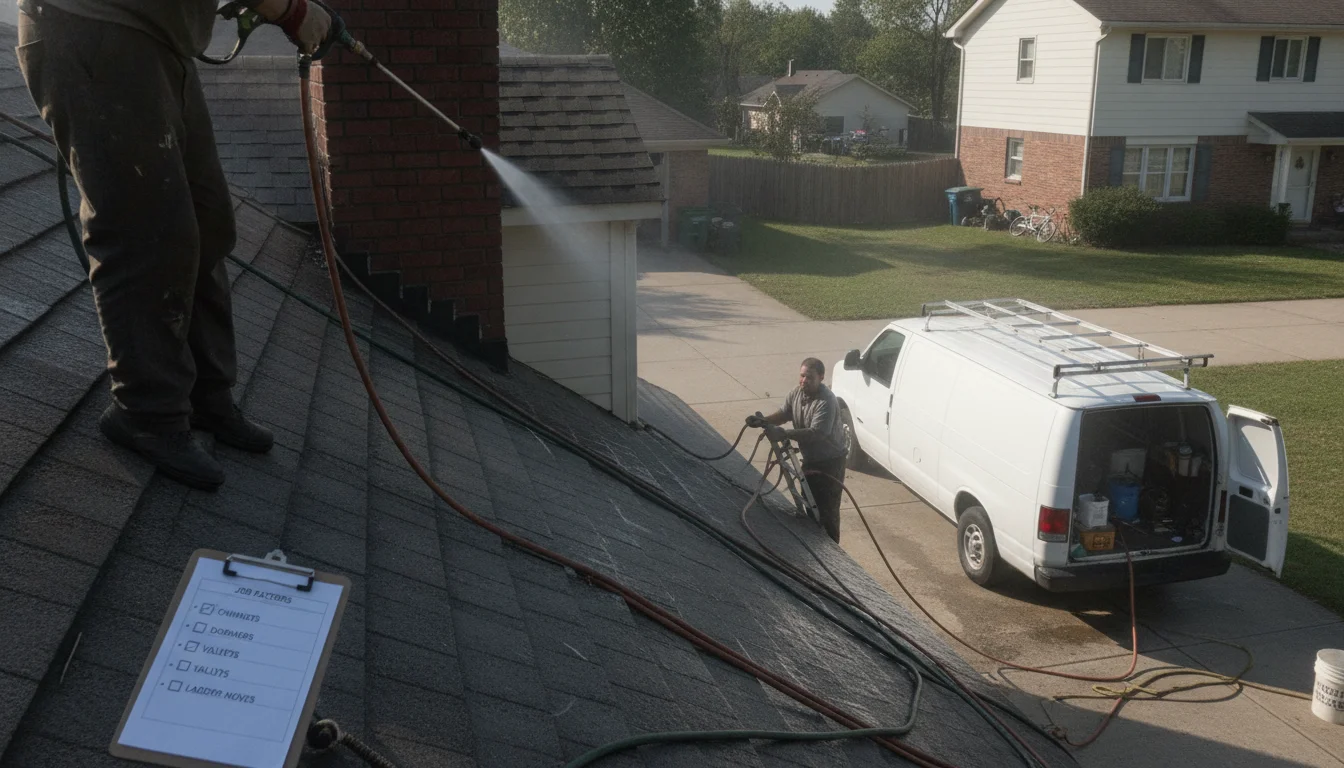
Cleaning targets growth and stains. Soft washing—not high pressure—is the right approach for shingles. It improves curb appeal and helps the surface dry faster. But cleaning cannot correct curled tabs, missing shingles, rotted sheathing, failed flashing, or active leaks.
Damage moves beyond appearance when you see cracked or brittle shingles, spongy or springy areas underfoot, or stained ceilings inside. Alpharetta Pressure Washing works across Alpharetta each week and often finds that a careful soft wash brings roofs back; they also flag roofs that should not be cleaned because the material has already failed.
2. How to Decide: Signs Cleaning Is Enough vs. When to Replace
Age matters. A mid-life roof that was installed well usually has moss as a surface issue. Very old roofs near the end of their expected life are weaker, and aggressive removal can do more harm than good.
Check how deep the moss runs. Light, patchy growth on the surface points to a cleaning job. Thick mats rooted under shingle edges may mean the bond is weak and replacement is safer.
Look for visible wear. Curling, cupping, heavy granule loss, torn tabs, or daylight at ridges point toward replacement. In the attic, watch for damp wood, musty odors, or stained insulation—signs of leaks or poor airflow that can shorten roof life.
Quick signs to guide your choice:
- Clean when shingles lie flat, feel firm, and there are no leaks.
- Clean when moss is patchy and not rooted deep under tabs.
- Replace when there are leaks, soft spots, or widespread curling.
- Replace when many shingles are missing, cracked, or slick with lost granules.
3. Costs, Timelines, and Risks Compared
Money matters, but costs vary by roof size, pitch, access, and material. Moss removal is usually a shorter project than a full replacement. Cleaning often takes hours; a tear-off and new roof can take several days and can affect parking, noise levels, and yard access.
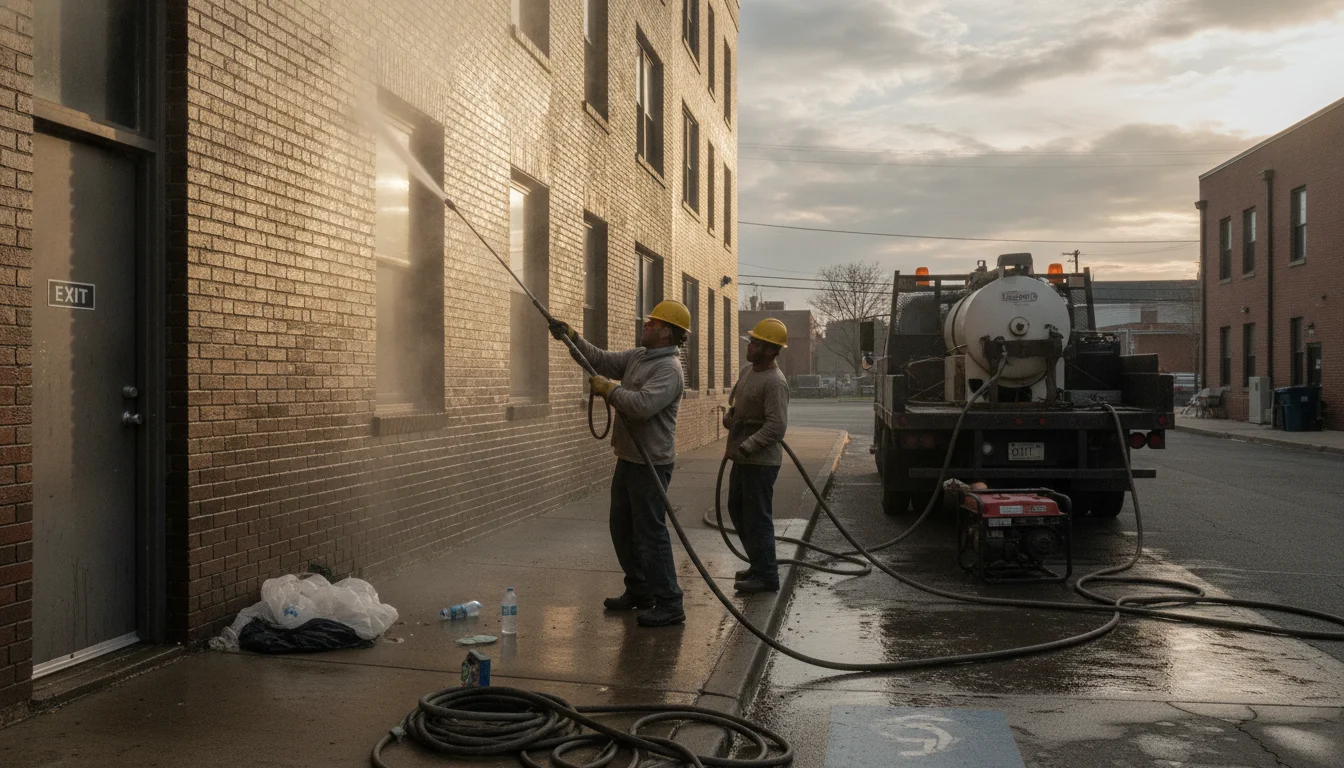
Think risk and warranty. Many shingle makers warn against high-pressure washing on roofs. Soft washing with the right mix helps protect the roof and any remaining warranty. Replacement carries its own risks: weather delays, exposed decking, and dumpster placement. Always ask about safety steps, runoff capture, and site cleanup.
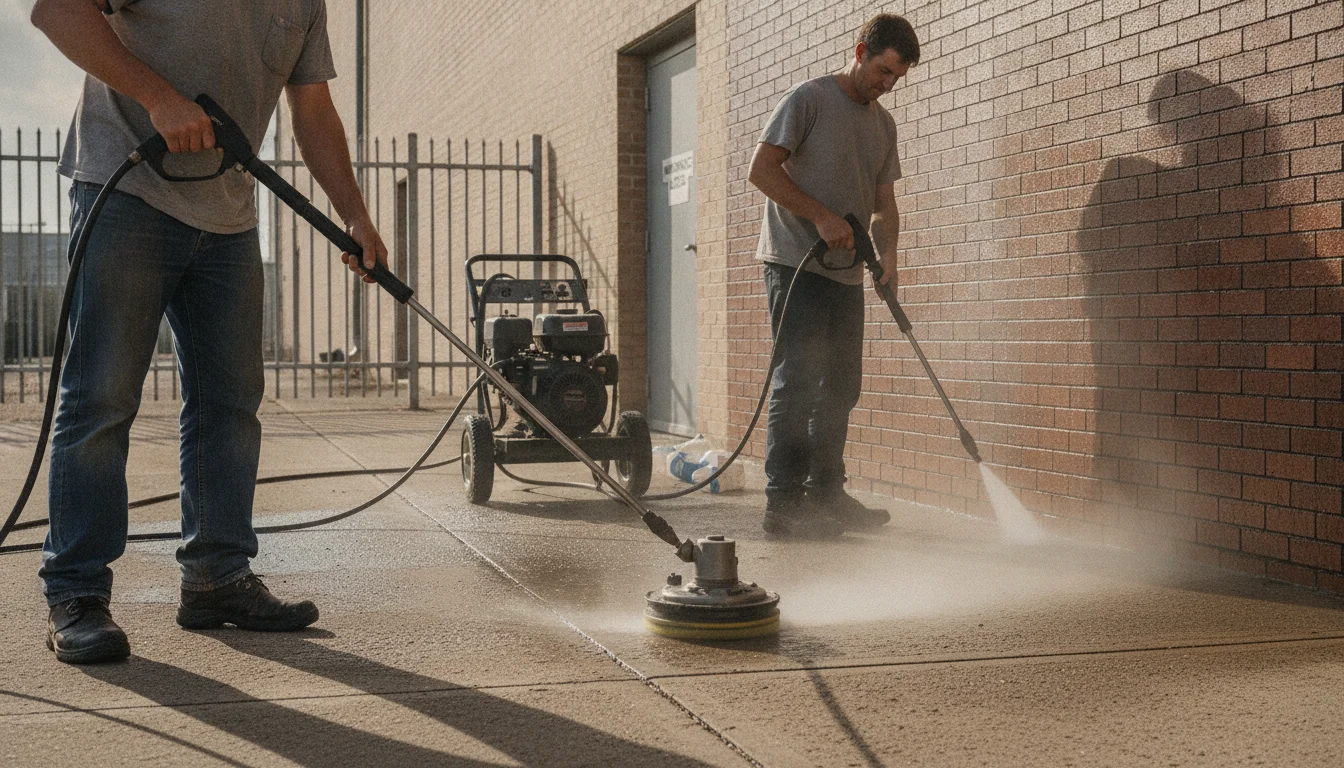
Environmental impact counts. A careful pro will control cleaning runoff, protect plants, and use roof-safe detergents. For a new roof, consider how old shingles will be handled; recycling options are available in some parts of North Georgia. If cleaning reveals driveway marks, stain removal—such as oil stain removal under Concrete Cleaning Services—can tidy up surrounding hard surfaces.
4. Aftercare and Prevention to Keep Moss From Returning
Good habits reduce regrowth. Clear leaves from valleys and gutters. Trim back overhanging hardwood branches so sun and air can reach the roof. Make sure downspouts move water away so the roof dries quickly in Alpharetta’s humid seasons.
Treatments help. Zinc or copper strips near the ridge can reduce new growth as rain carries metal ions over the surface. An algaecide—a cleaner that slows algae and moss—can be applied as part of soft washing. Avoid salt or harsh DIY mixes that can stain or harm plants.
For DIY, use care. Stay off steep roofs. Never use a pressure washer on shingles. Use a safety line and a soft-bristle brush only on small, low areas. Most owners are better off hiring a pro for Roof Cleaning Services, and many pair that visit with House Washing Services, Building Washing Services, or Concrete Cleaning Services when needed.
A pro inspection should include photos, a shingle condition check, attic checks for moisture, and a simple maintenance plan for the Alpharetta area. Alpharetta Pressure Washing can recommend an interval for moss treatment and suggest prevention steps tailored to local shade and pollen conditions.
Conclusion
If the roof is sound and watertight, moss removal with soft washing is usually enough and helps the roof dry and look clean. If you see leaks, soft spots, missing tabs, or heavy wear, replacement is the safer choice. For a clear recommendation tailored to your property, Contact us to schedule a roof moss and shingle health inspection.
Key takeaways
- Clean when shingles are flat, firm, and leak-free; replace when there is damage.
- Soft washing removes moss without stripping shingle grit.
- Attic moisture or stained ceilings point to deeper issues.
- Prevention works: clear debris, improve sun and airflow, and use zinc or copper strips.
- Ask about runoff control, safety, and warranty-friendly methods.
Frequently Asked Questions
How long does moss removal last?
Results vary by shade, tree cover, and roof design. With soft washing and a follow-up treatment, many roofs stay clearer for a year or more. Keeping gutters clean and trimming branches helps extend results. Adding zinc or copper strips can further slow new growth between routine Roof Cleaning Services.
Will moss removal damage my shingles?
Done right, it should not. Pros use soft washing with low pressure and roof-safe cleaners to avoid stripping granules. They avoid walking high-wear areas, rinse carefully, and protect plants. Damage risk rises with high-pressure washing, harsh scrubbing, or when shingles are already brittle or at end of life.
Can I remove moss with a pressure washer?
It is not recommended for shingles. High pressure can drive water under tabs and strip protective granules. That speeds wear and can void warranties. Use soft washing instead. If you try DIY, work from a ladder on low edges only and keep safety first, or hire a local pro in Alpharetta.